
The total value of India's top 100 brands has increased by 2 per cent, from $162.1 billion in 2020 to $164.9 billion in 2021, according to the latest Brand Finance India 100 2021 report. This uplift in brand value over the course of the first year of the pandemic is an impressive feat given the global economic crisis following the implementation of national lockdowns in March 2020, when business activity was brought to a halt, affecting both production and consumption. Among the brands that came on the top of the list include Tata Group, Reliance Industries, and Mahindra Group.

Digital payments provider Paytm is all set to make its market debut as early as this year, with an aim to raise $3 billion (around Rs 22,000 crore). If successful, this could be the biggest initial public offering (IPO) by an Indian company, breaking Coal India's 2010 record of Rs 15,475 crore. According to media reports, the board of One97, parent company of Paytm, is all set to meet this Friday to formally approve the IPO plan.

Smaller stocks continue to shine at the bourses. The BSE MidCap index is up 18 per cent since the beginning of January this year against a 5 per cent rise in the Sensex during the period. With the current rally, the mid-cap index has doubled in value since the end of March 2020 against a 70 per cent rally in the Sensex during the period. On Tuesday, the mid-cap index closed at 21,232, as compared to 17,941 at the end of December 2020. In the same period, the benchmark index moved from 47,751 to 50,193.

Banking technology start-up Zeta is the latest entrant to the unicorn club after raising $250 million in its Series C round from SoftBank Vision Fund 2. Sodexo participated as an additional minority investor in the round. Founded by serial entrepreneur and billionaire Bhavin Thurakia, the startup is now valued at $1.4 billion. It is the 14th company this year to cross the $1 billion valuation mark after Meesho, Cred, Pharmeasy, ShareChat, Moglix and others.

India's top IT companies have shown a hiatus between their performance on the bourses in the pandemic period and earnings growth. The combined market cap of the top five IT companies - Tata Consultancy Services, Infosys, Wipro, HCL Technologies, and Tech Mahindra - is up 87 per cent since the end of March 2020. In comparison, the benchmark BSE Sensex is up 68 per cent during the period. So the industry beat the broader market by a big margin in the last one year.
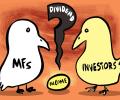
The combined dividend payout by early-bird companies -- those that have declared their results for FY21 -- is up 8.9 per cent, lower than the 21.9 per cent rise in in FY20 but ahead of the underlying growth in India Inc business last year. Combined net sales of these early birds were down 1.8 per cent last financial year while net profit was up 27.3 per cent in FY21. Some top companies that have stepped up dividend payout in FY21 include Hindustan Unilever, Indus Towers, Tata Steel, Ultratech Cement, Larsen & Toubro, Dabur, Asian Paints, and UPL. In contrast, banks have skipped dividends under an RBI diktat while companies such as Marico, TCS, Maruti Suzuki, and Godrej Consumer are paying lower dividends for FY21.

Shortages of chips will impact the car market

Thanks to a continued rise in the market capitalisation of the Adani Group companies, its promoter Gautam Adani is now the second richest Asian and fourteenth richest businessman in the world with a networth of $66.5 billion. Reliance Industries promoter Mukesh Ambani remains the wealthiest businessman in Asia with a networth of around $76.5 billion, according to Bloomberg data. The six Adani Group companies had combined market capitalisation of Rs 8.36 trillion as on Thursday, against Reliance Industries' market capitalisation of Rs 12.6 trillion. Adani Green tops the charts in the group with m-cap with Rs 1.99 trillion.

From helping their employees infected with the Covid-19 virus to vaccinating them or supporting the families of those who might have succumbed to the infection, several companies in India are trying to do their bit in this difficult time. Some have even widened their support net to include all stakeholders as well as an extended community. To the families of the employees it lost to Covid-19, Noida-headquartered IT services and consulting company HCL Technologies is, for instance, paying salary for a year, medical insurance for three years and extending support for their children's education for five years.

Although the number of resignations came down at Cognizant in April and continued to slow in May, the impact of attrition would play out in the second quarter also because of the longer notice period in India.

Historically, Tata Steel has always been among the biggest companies in the group in terms of m-cap, revenue, and profit but its fortunes began to decline after 2010 due to a sharp decline in the profitability of its European operations that it had acquired in 2007. The company was hit by a sharp rise in its debt level after this acquisition. First, it lost out to Tata Motors in terms of revenue in FY11 and then in March 2015, Titan beat it to become the third-biggest firm in the group in terms of m-cap. In FY20, TCS reported higher revenue and Tata Steel had become the third biggest company in that terms.
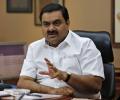
The group companies now lead the market capitalisation league table in sectors such as ports, power generation, gas distribution and transmission, and power transmission and distribution, ahead of incumbents in both public and private sector. This has Gautam Adani family the second wealthiest in business in India.

Overall, Tata Steel becomes the seventh non-financial firm, including four oil PSUs to report quarterly revenues of Rs 50,000 crore.

To be able to manage any such uptick, Indian IT services players are hiring more locals, and relying on hybrid work models.

According to government data, the Centre procured only 35,179 ventilators out of the 50,000 originally ordered.

Earnings growth in the early-bird sample has been driven by banks and iron & steel companies.

Attrition is driving the hiring effort on campuses.

However, experts caution that investors should not expect the big returns they got from the sector between March and September 2020.

Together with its share buyback worth Rs 16,000 crore completed in January this year, TCS shareholders will receive a record Rs 30,250 crore from their company in FY21.

Infosys, Facebook, Genpact, and Cognizant, among others, have reached out to employees and offered support in different ways as the second wave of Covid cases sees an exponential rise. Companies are asking employees to stay indoors and prioritise the health and safety of their families. This is of significance as several information technology firms were going to take a call on work-from-home from June and had plans to allow some employees to come back to work.
